
Lump Sum vs. Periodic Spousal Support: Holden 2026 ONCA 599
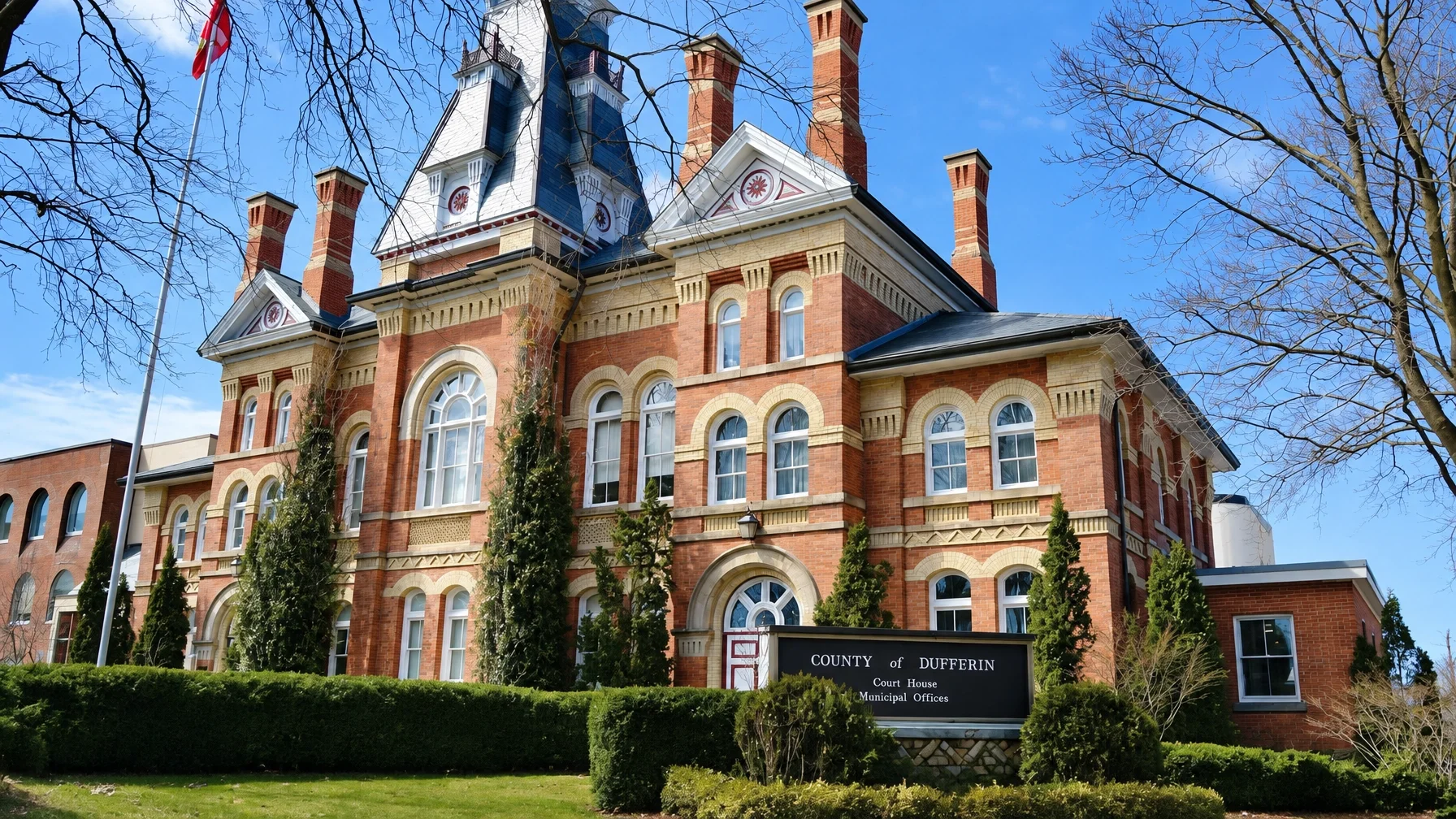
Holden confirms that the Rule of 65 may support indefinite periodic support, but it does not prevent a court from ordering a lump sum.
In This Guide
This guide explains the facts in Holden v. Holden, the Rule of 65, lump-sum support, the Spousal Support Advisory Guidelines, appellate review, and practical preparation for Ontario spouses.
What did the Ontario Court of Appeal decide in Holden?
The Ontario Court of Appeal dismissed the appeal in Holden v. Holden, 2026 ONCA 599, released August 24, 2026.
The Court upheld a net lump-sum spousal support award of $55,000.
The parties were married for 21 years. They separated in July 2019. At separation, the wife was 47. The husband was 54. Both parties worked throughout the marriage (para. 2).
The trial judge found annual income of $154,008 for the wife and $210,794 for the husband (para. 2).
The wife had relocated to Ottawa for the husband’s career. The trial judge found that her career was not compromised. The judge found that it progressed through her own choices. The judge also rejected the argument that guardianship responsibilities for her niece harmed her career (para. 2).
After a six-day trial addressing property and support, the trial judge found no compensatory entitlement to spousal support. The judge found “some” non-compensatory entitlement (para. 3).
The wife sought $150,000. The husband argued for no support or, alternatively, $35,000 (para. 3).
The trial judge ordered $55,000 in net lump-sum support. The amount was offset against the wife’s $88,183.29 equalization payment owing to the husband. The Court’s summary also referred to the DivorceMate range considered at trial (para. 3).
The property findings were not appealed. The appeal concerned support and costs.
The Court of Appeal found no reviewable error in the form or amount of support. It applied the usual appellate deference and referred to Davis and Hickey on that standard (para. 5).
The panel was Miller, Wilson and Madsen JJ.A. Costs were fixed at $30,000 at trial and $15,000 on appeal, inclusive of HST, payable by the appellant to the respondent (para. 10).
How does the Rule of 65 affect periodic spousal support?
The Rule of 65 applies where the recipient’s age at separation plus the length of the marriage reaches at least 65, in a marriage of at least five years.
On these facts, the Rule of 65 applied.
Under the Spousal Support Advisory Guidelines, periodic support would ordinarily be indefinite when the Rule of 65 applies. Indefinite periodic support is subject to possible variation. It is not fixed to a set number of years.
The Rule of 65 does not create an automatic right to indefinite monthly payments.
It also does not remove a court’s discretion to order a lump sum.
That distinction matters.
A spouse may establish entitlement to support. The court must then decide the appropriate form, amount, and duration. Those decisions depend on the evidence and the circumstances.
In Holden, the Court of Appeal inferred an approximate notional duration of six years from the $55,000 award. The trial judge did not have to state a specific monthly amount or formal duration for the lump sum to be valid (para. 6).
The inferred six-year period was not an order for six years of periodic payments. It was an appellate interpretation of the award.
When can lump-sum support replace periodic support?
Ontario’s Family Law Act permits courts to order periodic support, a lump sum, or both.
A lump sum can provide finality. It can also address support through a property adjustment or offset. It may avoid an ongoing payment relationship. It may also be relevant where the parties’ financial circumstances make a single payment practical.
Periodic support can respond to changing circumstances. Depending on the order, it may be varied after a material change. It may also account for future income changes, needs, or available means.
Neither structure is automatically appropriate.
A court must consider the evidence. The court must also consider the advantages and disadvantages of the selected form.
In Holden, the Court of Appeal noted that failing to consider those advantages and disadvantages can amount to an error in principle (para. 7).
The trial decision was upheld because both parties had asked for lump-sum support. The trial judge was not choosing a lump sum contrary to the positions of both parties (para. 7).
The Court distinguished:
Mwanri v. Mwanri, 2015 ONCA 843; and
Davis v. Crawford, 2011 ONCA 294.
The Court cited Mwanri for the error-in-principle point and noted that this principle emerges from cases in which lump-sum support was not sought by both parties (Davis, at paras. 19-20).
The practical point is narrow. A lump sum may be available. The process must still address the evidence, the parties’ positions, and the statutory objectives. If one party wants a lump sum and the other does not, the judge must actually address the trade-offs. If that does not happen, that omission may become the appeal ground.

Are the Spousal Support Advisory Guidelines mandatory?
No.
The Spousal Support Advisory Guidelines are advisory. They are not a mandatory formula (para. 8).
The Guidelines can assist with amount and duration. They do not replace the court’s analysis of entitlement.
In Holden, the trial judge found no compensatory entitlement. The judge found only “some” non-compensatory entitlement. Those findings affected the support analysis.
The Court of Appeal accepted that the detailed factual findings informed the quantum. The Court held that the award could fall below an amount or duration suggested by the Guidelines.
This does not mean that the Guidelines are unimportant.
A support analysis may still require:
reliable income evidence;
the length of the relationship;
the parties’ ages;
health and future means;
need and ability to pay;
career and earning-capacity evidence;
contributions to the relationship;
child support obligations;
equalization and property consequences; and
the effect of any domestic contract.
The 2025 Federal Child Support Guidelines tables took effect on October 1, 2025, and remain in force during 2026. They may also matter where child support forms part of the overall financial analysis. Child support and spousal support remain separate issues. The current tables are published by the Department of Justice Canada: https://www.justice.gc.ca/eng/fl-df/child-enfant/fcsg-lfpae/2025/index.html
What does Holden say about appeals of support quantum?
Holden confirms the limited scope of appellate intervention in discretionary support decisions (para. 5).
An appeal is not a fresh hearing on the preferred amount.
The Court of Appeal does not simply substitute its own view because another result might also have been reasonable.
Intervention may be available where the lower court:
made an error in principle;
misapprehended important evidence;
applied the wrong legal test; or
made an award outside the range of reasonable outcomes.
In Holden, the Court found no such error (para. 9).
The trial judge’s factual findings were detailed. The findings addressed compensatory and non-compensatory entitlement. The support award was connected to those findings.
The Court therefore upheld both the form and quantum of support.
The decision does not establish that $55,000 is an appropriate amount in another case. It does not create a standard lump-sum figure for a 21-year marriage. It confirms that support remains fact-specific.
What should Ontario spouses prepare before discussing support?
A support review should begin with documents and evidence.
Useful materials may include:
notices of assessment;
recent income tax returns;
employment records;
pension and benefit information;
business or professional income records;
budgets showing post-separation needs;
medical information where relevant;
evidence of career decisions during the relationship;
records concerning parenting responsibilities;
separation agreements or marriage contracts;
property and debt schedules; and
equalization calculations.
The analysis should separate entitlement from quantum.
A long relationship may support a claim. It does not, by itself, establish compensatory entitlement. A spouse may have a non-compensatory claim based on need and hardship even where compensatory entitlement is not established.
The selected payment structure also requires careful review.
Questions may include:
Is a single payment financially practical?
Would periodic support address changing income?
Is the proposed lump sum net or gross?
Is there an equalization payment?
How would taxes affect the comparison?
What happens if circumstances change?
Does a domestic contract address support?
Are retirement assets or pensions involved?
Legal advice should be based on the actual evidence. A general calculation cannot predict a court’s result.
Orangeville & Brampton family law logistics
OMNI LAW GROUP serves Orangeville, Dufferin County, Brampton, and Peel Region from the Orangeville base at 162 Broadway, Suite 8, Orangeville, ON L9W 1K3.
The Orangeville office provides a local setting for document review, preparation, signing, and initial consultations. The office is near the Orangeville Courthouse at 10 Louisa Street. Courthouse security screening can affect arrival time. Parties should allow time for screening and check current courthouse requirements.
Peel Region court matters are processed at 7755 Hurontario Street in Brampton. There is no current Brampton office. Serving Brampton and Peel Region from our Orangeville base. Client preparation, document signing, and strategy sessions can occur locally in Orangeville or through secure virtual appointments.
Initial Consultation: By Appointment
Hours: Monday to Friday, 9:00 AM to 5:00 PM
Phone: 905-497-7200
Peel Region matters are heard at the A. Grenville & William Davis Courthouse, 7755 Hurontario Street, Brampton.
OMNI LAW GROUP focuses on the intersection of Criminal Defence & Family Law.
For family matters, see family lawyer serving Orangeville, Dufferin County and Peel Region. For related criminal allegations, see criminal defence lawyer in Orangeville.
General information, conflict checks & separate retainers
This article provides general legal information about Holden v. Holden, 2026 ONCA 599. It is not legal advice. It does not assess any individual’s entitlement, income, needs, property, equalization, or litigation position. Reading this article does not create a lawyer-client relationship.
A conflict check is required before OMNI LAW GROUP can provide legal advice or open a file. Separate retainers are required for spouses or other parties with conflicting interests. No confidential information should be provided until OMNI LAW GROUP confirms that it can act.
Local Legal FAQ
Can the Rule of 65 require indefinite periodic spousal support in Ontario?
No. The Rule of 65 generally points toward indefinite periodic support under the Spousal Support Advisory Guidelines. It does not require a court to order indefinite monthly payments. Holden v. Holden, 2026 ONCA 599 confirms that a court may exercise discretion to order a lump sum instead. The result depends on entitlement, need, means, evidence, the parties’ positions, and the statutory framework. The Rule of 65 is one part of the analysis. It does not create an automatic entitlement to a particular amount or payment structure.
Can Ontario courts order lump-sum spousal support after a long marriage?
Yes. Section 34 of Ontario’s Family Law Act permits a court to order periodic support, a lump sum, or both. In Holden, the parties had been married for 21 years. The Rule of 65 applied. The Ontario Court of Appeal nevertheless upheld a $55,000 net lump-sum award. The Court noted that both parties had requested lump-sum support. The decision does not establish a standard amount for long marriages. The appropriate form and amount depend on the evidence, including entitlement, income, need, means, property, equalization, and any domestic contract.
Are the Spousal Support Advisory Guidelines binding in Ontario?
No. The Spousal Support Advisory Guidelines are advisory. They provide a structured reference for amount and duration after entitlement is established. They do not operate as a mandatory formula in every case. Holden v. Holden, 2026 ONCA 599 confirms that a court may depart from the amount or duration suggested by the Guidelines where the factual findings support the result. A court must still consider the relevant statutory factors and explain the decision. A party should obtain advice based on the complete financial and relationship history before relying on a guideline range.
ABOUT THE AUTHOR

Vaneet Sangha is Co-founder of OMNI LAW GROUP and a member of the Law Society of Ontario. Vaneet contributes to family law content concerning separation, spousal support, property division, parenting time, and decision-making responsibility in Ontario.
OMNI LAW GROUP serves clients from 162 Broadway, Suite 8, Orangeville, ON L9W 1K3.
Phone: 905-497-7200