
Postnuptial Agreement vs Prenuptial Agreement vs Separation Agreement: What Ontario Couples Need to Know
When you're planning for marriage, already married, or facing separation in Ontario, understanding your legal options can feel overwhelming. Whether you're in Brampton, Orangeville, or anywhere else in Ontario, you have three main types of agreements that can protect your interests: prenuptial agreements, postnuptial agreements, and separation agreements.
As a family law lawyer in Brampton and family law lawyer in Orangeville, I've seen countless couples benefit from understanding these agreements early. Let's break down each type so you can make informed decisions about your future.
What Makes These Agreements Different?
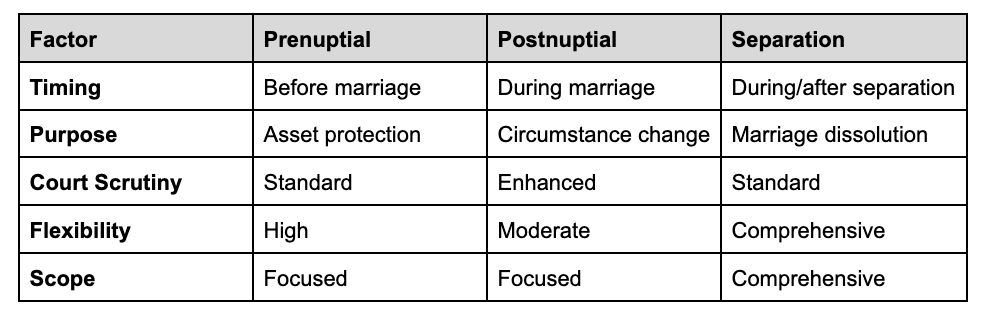
The key difference between these three agreements comes down to timing and purpose. Think of them as different tools for different stages of your relationship:
Prenuptial agreements happen before marriage
Postnuptial agreements happen during marriage
Separation agreements happen when the marriage is ending
Each serves a unique purpose and has different legal requirements in Ontario.
Prenuptial Agreements: Planning Ahead

A prenuptial agreement (also called a marriage contract in Ontario) is a legally binding contract that couples sign before tying the knot. It only takes effect once you actually get married.
Why Ontario Couples Choose Prenups
Many Ontario couples opt for prenuptial agreements to protect assets they bring into the marriage. This might include:
Family businesses or professional practices
Inheritances from parents or grandparents
Real estate properties owned before marriage
Investment portfolios or retirement savings
Valuable collections or personal property
Prenups also clarify who's responsible for debts accumulated before marriage. If your partner has significant student loans or credit card debt, a prenuptial agreement can protect you from becoming responsible for those obligations.
Benefits for Blended Families
If you have children from a previous relationship, a prenup becomes especially important. It ensures that specific assets remain designated for your children's inheritance, regardless of what happens in your new marriage.
The Legal Requirements
In Ontario, prenuptial agreements require:
Full financial disclosure from both parties
Independent legal advice for each person
No coercion or undue pressure
Fair terms that aren't unconscionable
Courts generally view prenups favourably because both parties entered the agreement voluntarily before the emotional stress of marriage breakdown.
Postnuptial Agreements: Adjusting During Marriage

A postnuptial agreement is created after you're already married. Unlike a prenup, it takes effect immediately when signed, not at some future event.
Common Reasons for Postnups
Married couples often seek postnuptial agreements when their circumstances change significantly:
One spouse starts a successful business
A couple receives a large inheritance
Financial priorities shift after having children
One partner wants to stay home to raise kids
Investment strategies or career paths change dramatically
Why Courts Scrutinize Postnups More Carefully
Because you're already married when creating a postnuptial agreement, Ontario courts examine these agreements more closely. They want to ensure that one spouse didn't pressure or coerce the other into signing.
The court will look at:
The marriage dynamics at the time of signing
Whether both parties had independent legal representation
If there were any power imbalances
Whether the terms are fair and reasonable
Estate Planning Benefits
Postnuptial agreements serve as excellent estate planning tools. If your priorities change after marriage due to new assets, family changes, or other factors, a postnup allows you to update your arrangements while staying married.
Separation Agreements: When Marriage Ends

A separation agreement is fundamentally different from the other two. It's created when spouses are separating, divorcing, or have already separated. This agreement settles all the issues arising from your marriage breakdown.
What Separation Agreements Cover
Unlike prenups and postnups that focus primarily on asset protection, separation agreements are comprehensive documents addressing:
Division of all marital property and assets
Spousal support obligations and duration
Child custody and parenting time arrangements
Child support calculations and payment terms
Debt allocation and responsibility
Insurance beneficiaries and coverage
Working with Your Separation Lawyer
A skilled separation lawyer becomes crucial during this process. The agreement must comply with Ontario's Family Law Act and consider both federal and provincial guidelines for child support.
Your divorce lawyer will ensure that:
All assets are properly valued and divided
Support calculations follow current guidelines
Child custody arrangements prioritize the children's best interests
The agreement protects your long-term financial security
Benefits Over Court Litigation
Separation agreements offer significant advantages over going to court:
Lower legal costs
Faster resolution
More control over the outcome
Greater privacy
Less emotional stress on children
Comparison: Which Agreement is Right for You?
When Should Brampton and Orangeville Couples Consider Each Agreement?
Choose a Prenuptial Agreement If:
You own significant pre-marital assets
You have children from previous relationships
You're starting a business or professional practice
You want clear financial expectations from day one
Either party has substantial debt
Choose a Postnuptial Agreement If:
Your financial situation changed dramatically after marriage
You didn't get a prenup but now want protection
You've acquired new assets or businesses during marriage
Your family structure has evolved
You want to update estate planning arrangements
Choose a Separation Agreement If:
You and your spouse have decided to separate
You want to avoid lengthy court battles
You prefer to control the terms of your separation
You want to minimize costs and stress
You need comprehensive resolution of all marital issues
The Importance of Independent Legal Advice

Regardless of which agreement you're considering, each party should have their own family lawyer. In Brampton and Orangeville, this isn't just good practice: it's often essential for the agreement to be enforceable.
Your lawyer will:
Explain your rights and obligations
Ensure you understand all terms
Negotiate fair provisions
Protect your interests throughout the process
Make sure the agreement complies with Ontario law
Making the Right Choice for Your Situation
Every couple's situation is unique. What works for your friends or family might not be the best choice for you. The key is understanding your options and getting proper legal guidance.
Whether you need a family law lawyer in Brampton or a family law lawyer in Orangeville, the right legal professional will help you navigate these important decisions. They'll assess your specific circumstances and recommend the most appropriate type of agreement.
Don't wait until you're in crisis mode to think about these protections. Prenuptial and postnuptial agreements are much easier to create when relationships are strong and communication is open.
If you're already facing separation, a well-crafted separation agreement can save you thousands of dollars and months of stress compared to court litigation.
Take the Next Step
Understanding the differences between prenuptial, postnuptial, and separation agreements is just the beginning. The next step is getting personalized advice for your specific situation.
At OMNI LAW GROUP, we help Ontario couples in Brampton, Orangeville, and throughout the region navigate these important legal decisions. Our experienced team understands the nuances of Ontario family law and can guide you toward the best solution for your circumstances.
Ready to protect your future? Contact our office at 905-497-7200 to schedule a consultation with one of our experienced family law professionals. Book now.