
Breaking: SCC Recognizes New Tort of Intimate Partner Violence (Ahluwalia v. Ahluwalia)
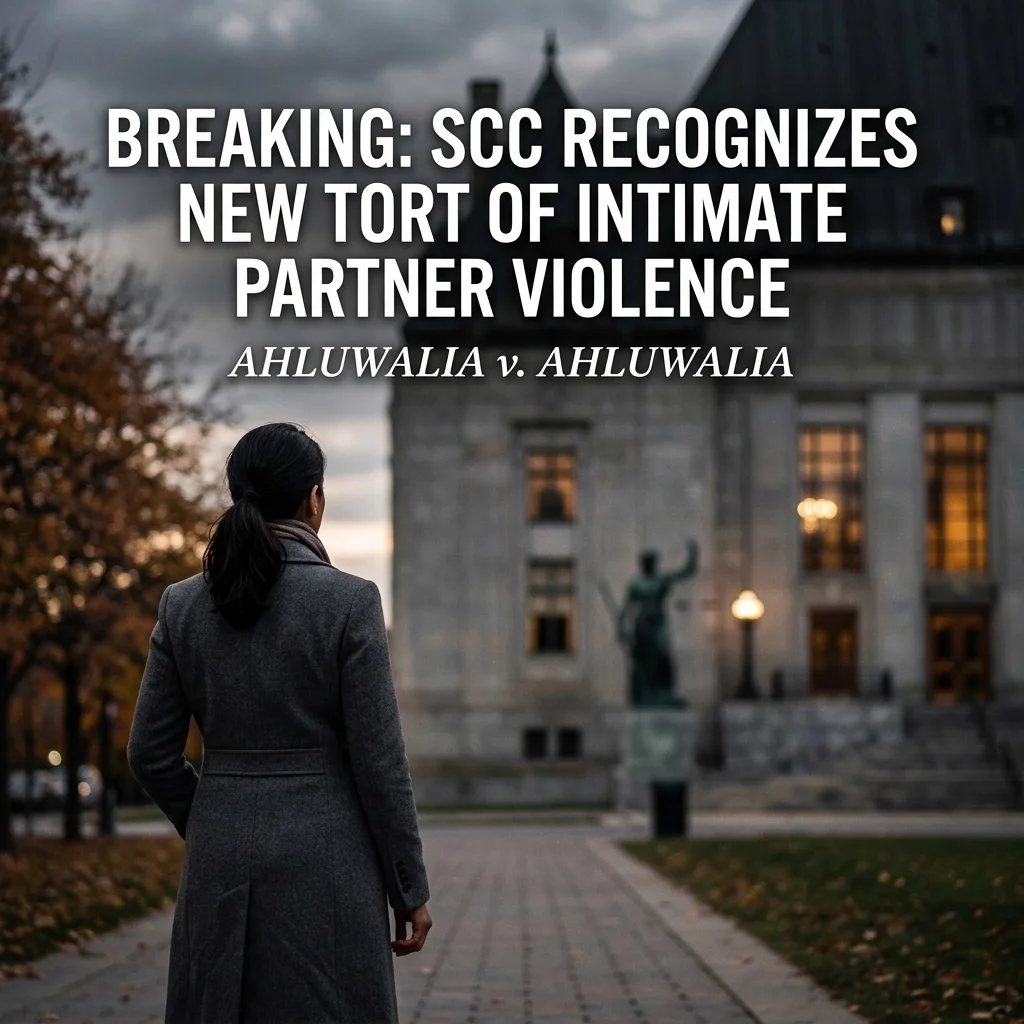
Today, the Supreme Court of Canada recognized the "tort of intimate partner violence" in Ahluwalia v. Ahluwalia. A tort is a civil legal claim for damages due to harm. This landmark 6-3 decision allows Brampton survivors to sue for damages resulting from patterns of coercive control, financial abuse, and psychological intimidation.
In This Guide
The Supreme Court's landmark recognition of the tort of intimate partner violence.
Understanding coercive control and its new legal status in 2026.
The Brampton origins of the Ahluwalia case and local impact.
How this decision changes the landscape for divorce and domestic assault cases.
Legal avenues for seeking financial compensation for long-term abuse.
A Massive Shift in Ontario Family Law
The Supreme Court of Canada has just handed down a decision that will forever change how we approach domestic litigation in Peel Region. In a 6-3 ruling released today, May 15, 2026, the Court officially recognized the tort of intimate partner violence. The split matters. The majority was written by Justice Kasirer, joined by Chief Justice Wagner, Justice Martin, Justice O’Bonsawin, and Justice Moreau. Justice Karakatsanis wrote concurring reasons. Justices Jamal, Côté, and Rowe dissented. This is not just a technical legal update; it is a fundamental shift in how the justice system views the reality of abuse within a home.
For years, the law struggled to address abuse that didn't involve a specific physical strike or a single "event." If there was no punch thrown, the civil courts often hesitated to award damages. Justice Kasirer, writing for the majority, determined that existing torts like assault and intentional infliction of emotional distress are not enough to address the separate harm of coercive control. Today, the SCC has acknowledged that the true harm in many relationships is the "slow-burn" of coercive control: the systematic destruction of a person’s dignity, autonomy, and equality through isolation, surveillance, and psychological warfare.
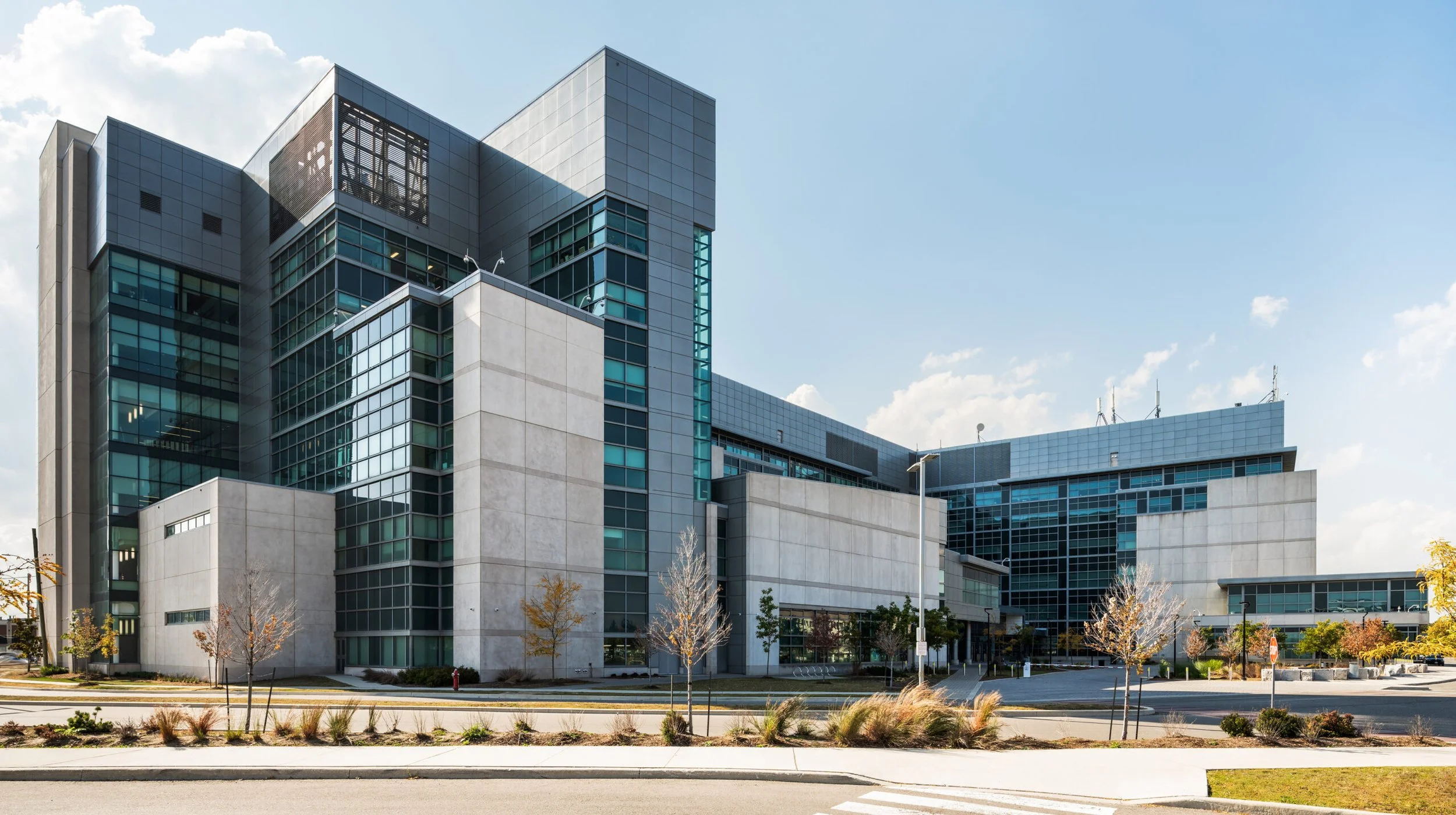
At OMNI LAW GROUP, we see the impact of these dynamics every day. Whether we are appearing at the A. Grenville and William Davis Courthouse or dealing with the intersection of criminal charges and family motions, we know that "violence" is rarely just about a single incident. This decision finally aligns the law with the lived experience of survivors in Brampton and across Canada.

Why the Ahluwalia Case Started in Brampton
The roots of this landmark victory are local. The case of Ahluwalia v. Ahluwalia began right here in Brampton, involving Kuldeep and Amrit Ahluwalia. The trial judge, Justice Mandhane, originally recognized that the existing legal framework was insufficient to capture the decade-long pattern of emotional, financial, and physical abuse experienced by the mother in this case.
While the Ontario Court of Appeal previously expressed hesitation about creating a "new" tort, the Supreme Court of Canada has now affirmed that the unique nature of intimate partner violence requires its own legal category. For residents in Brampton and Orangeville, this means the local courts will now have a direct mandate to penalize abusers for the long-term damage they cause.
When you are walking through the security lines at the Davis Courthouse, you deserve to know that the law sees the whole picture of your relationship, not just a sanitized version of it. Our team focuses on the intersection of Criminal Defence and Family Law, ensuring that if you are dealing with a partner who has used the legal system as a weapon, we have the tools to fight back.
WE ADVOCATE FOR SURVIVORS OF DOMESTIC VIOLENCE
Relentless Representation & Strategic Legal Solutions
Call 905-497-7200
Targeting Coercive Control: What You Can Now Sue For
The recognition of this tort means that victims can now seek compensatory, aggravated, and even punitive damages for behaviours that were previously difficult to quantify in a courtroom. The SCC specifically highlighted "coercive control" as a pillar of this new tort.
The new tort has three core elements:
Wrongful conduct during or after an intimate relationship
Intentional abusive conduct
Conduct amounting to coercive control when viewed in context
Common indicators of coercive control that can now lead to legal damages include:
Isolation: Cutting you off from friends, family, or your community in Brampton.
Humiliation: Degrading conduct meant to break confidence and independence.
Surveillance: Using GPS trackers, checking your phone constantly, or monitoring your movements across Peel Region.
Financial Control: Controlling all bank accounts, preventing you from working, or forcing you to account for every cent spent.
Sexual Coercion: Pressuring or forcing sexual activity as part of a pattern of abuse.
Intimidation: Threats of deportation, threats to involve the Peel Children’s Aid Society (CAS) without merit, or conduct designed to make you fear the consequences of resistance.
If you are working with a Family Lawyer in Brampton, this decision provides a new "sword" in litigation. Instead of just dividing assets and determining support according to the 2026 Federal Child Support Table Updates, we can now seek significant financial awards for the trauma inflicted during the marriage.
The Intersection of Family and Criminal Law in 2026
At OMNI LAW GROUP, we often handle cases where family court orders and criminal bail conditions collide. This new tort bridges that gap. Often, a person might be facing a domestic assault charge handled by a Criminal Defence Lawyer in Orangeville, while simultaneously fighting for custody in Brampton.
Before today, these two worlds were often siloed. Now, the civil/family side of the law has caught up to the reality that criminal behaviour often leaves deep, non-physical scars that deserve financial restitution. We offer emergency weekend consultations for domestic assault bail hearings in Peel because we know that these situations escalate quickly. The Ahluwalia decision gives us a more robust framework to protect our clients' interests in both the short and long term.
Quick Facts: The Tort of Intimate Partner Violence
Standard of Proof: Like most civil matters, it is based on the "balance of probabilities" (more likely than not), which is a lower threshold than the "beyond a reasonable doubt" standard used in criminal court.
Damages: Courts can award money for emotional distress, loss of earning capacity due to trauma, and the cost of therapy.
Retroactivity: Because this clarifies existing common law principles, it can apply to patterns of abuse that began years ago.
Brampton Connection: The case sets a national precedent but was built on the facts presented in the Peel Region legal system.
WE SECURE YOUR FUTURE IN FAMILY COURT
Direct Advocacy & Clear Communication
Call 905-497-7200
How to Navigate the Davis Courthouse Security and Process
Filing for damages under the new tort of intimate partner violence isn't a simple paperwork exercise. It requires a deep dive into the history of the relationship. When we represent clients at the A. Grenville and William Davis Courthouse, we prepare them for the logistical reality of the "Davis lines": the security checks and the crowded hallways.
Our office is located conveniently on North Park Drive, allowing us to meet with clients in a safe, professional environment away from the stress of the courthouse. We understand that discussing intimate partner violence is painful. We focus on building a case that uses evidence: texts, emails, financial records, and witness testimony: to prove the pattern of coercive control.
If the Peel Regional Police have been called to your home, or if you have an active file with the Peel Children’s Aid Society (CAS), these documents can serve as vital evidence in your civil claim for damages. We at OMNI LAW GROUP are here to ensure that your voice is heard and that the abuser is held financially accountable for the harm they caused.

Local Legal FAQ
How does the new tort affect my divorce settlement in Brampton?
The recognition of the tort of intimate partner violence means you can now add a claim for "civil damages" to your family law application. This is separate from the division of property or spousal support. If you can prove a pattern of coercive control or abuse, the court may order your ex-partner to pay you a lump sum of money as compensation for the trauma. This is particularly relevant in 2026 as courts become more aware of the long-term economic impact of domestic abuse on a survivor's ability to work and thrive.
Can I still sue for domestic violence if the police didn't lay charges?
Yes. The criminal justice system and the civil/family justice system operate on different standards. Even if the Peel Regional Police decided there was not enough evidence for a criminal "beyond a reasonable doubt" conviction, you can still succeed in a civil claim for the tort of intimate partner violence. You only need to prove that the abuse occurred on a "balance of probabilities." Our team often handles cases where we bridge the gap between a failed criminal prosecution and a successful family law outcome.
What evidence do I need to prove coercive control at the Davis Courthouse?
Proving coercive control requires showing a "pattern" rather than a single event. Useful evidence includes logs of harassing text messages, records of financial restriction (e.g., being denied access to joint accounts), evidence of isolation (e.g., your partner preventing you from visiting family), and testimony from friends or neighbours. Because OMNI LAW GROUP focuses on the intersection of Criminal and Family Law, we are experienced in gathering and presenting the high-quality evidence needed to meet the SCC's new standards for this tort.
WE DEFEND YOUR RIGHTS IN PEEL REGION
Experienced Counsel & Strategic Defence
Call 905-497-7200
ABOUT THE AUTHOR

Rahul Kaushal is the Co-founder of OMNI LAW GROUP and a dedicated member of the Law Society of Ontario. With years of experience navigating the complex intersection of Family Law and Criminal Defence, Rahul provides authoritative and empathetic guidance to clients at the A. Grenville and William Davis Courthouse in Brampton and the Orangeville Courthouse. Alongside Co-founder Vaneet Sangha, Rahul is committed to ensuring that residents of Peel Region have access to robust legal protection, especially in the wake of landmark decisions like Ahluwalia v. Ahluwalia.