
The Matrimonial Home Deduction on Rural Acreage: When It's Available and How to Prove It
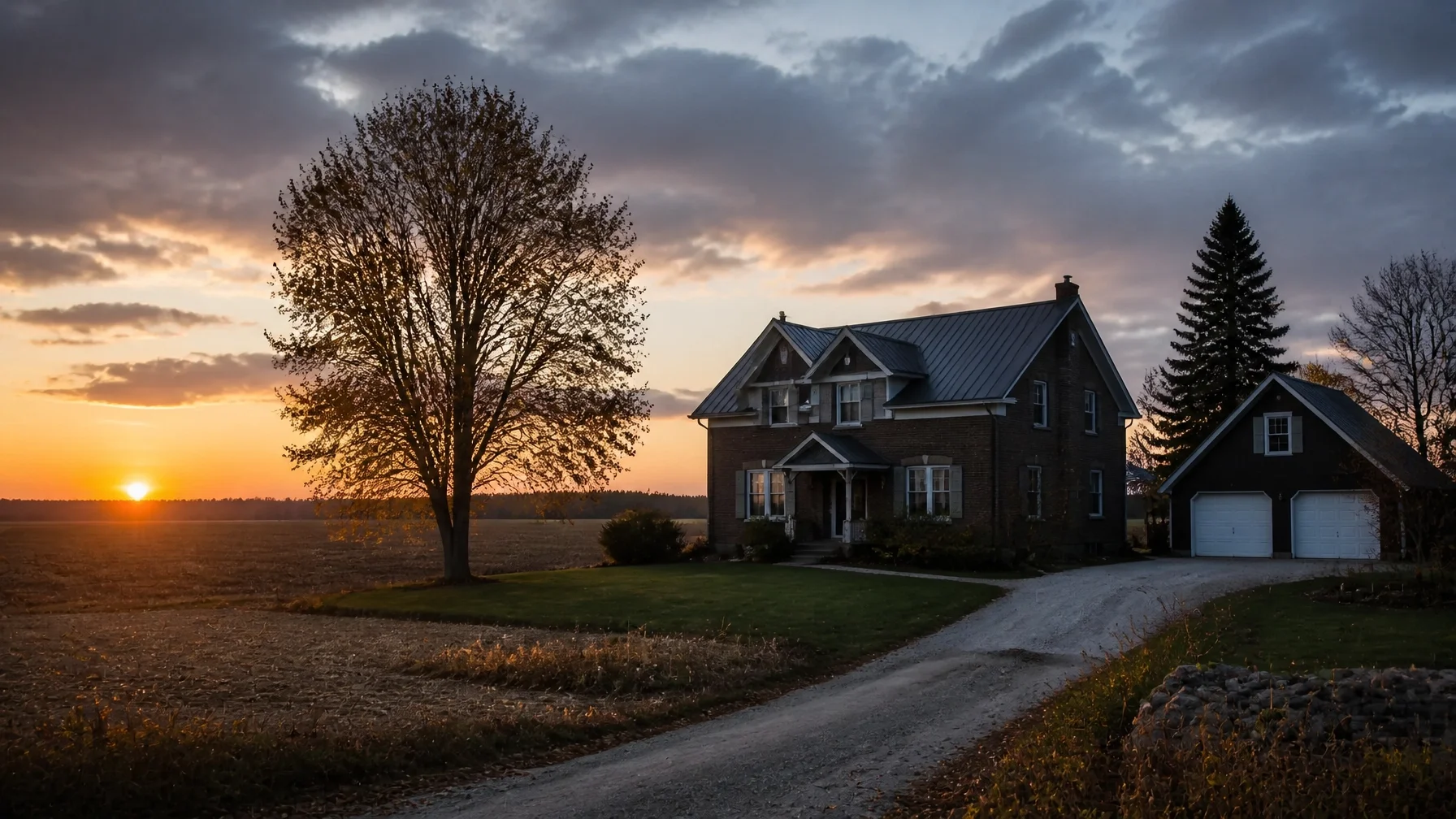
A matrimonial home generally loses its date-of-marriage deduction. On rural acreage, the result can differ. Section 18(3) of the Family Law Act may limit the matrimonial home to the residence and land reasonably necessary for its use.
In This Guide
This guide covers:
The general matrimonial home deduction rule in Ontario.
How section 18(3) applies to farms and rural acreage.
What Lawson v. Lawson and Iredale v. Dougall demonstrate.
The evidence needed to separate residential land from farmland.
Practical considerations for Mono, Mulmur, Melancthon, East Garafraxa, Amaranth & Shelburne-area properties.
What is the matrimonial home deduction in Ontario?
Ontario’s net family property rules usually permit a spouse to deduct the net value of property owned on the date of marriage.
The matrimonial home is the major exception.
Under section 4(1) of Ontario’s Family Law Act, a spouse generally cannot deduct the date-of-marriage value of a property that:
Was owned by that spouse on the date of marriage; and
Was still the matrimonial home on the date of separation.
The result can be significant.
The owning spouse may need to include the full separation-date value of the matrimonial home in net family property. The pre-marriage value is not deducted in the usual way.
This rule can apply even when one spouse purchased the home before marriage.
It can also apply when one spouse owned vacant land before marriage, then built the family home on that land.
The critical question for rural acreage is different:
Was the entire parcel residential, or was only part of it used as the family residence?
When does section 18(3) apply to rural acreage?
Section 18(3) addresses property normally used for a purpose other than residential.
The section provides that the matrimonial home is only the part of the property reasonably necessary for the use and enjoyment of the residence.
This creates a potential division between:
The house and residential curtilage.
The farmland, pasture, woodlot or other non-residential acreage.
“Curtilage” generally refers to the land immediately connected with the home. It may include areas such as:
The yard.
The driveway.
A septic system.
A well.
A garden.
A detached garage.
Necessary access and immediate residential outbuildings.
The exact area is not automatic.
One acre is not a universal rule.
Two acres is not a universal rule.
The court examines the property’s actual use, physical layout and evidence of what land was reasonably necessary for the residence.
A large property in Mono or Mulmur may require a different analysis from a smaller rural lot in Amaranth. A working farm in Melancthon may require a different analysis from a country property used only for residential enjoyment in East Garafraxa.
What does Lawson v. Lawson show?
Lawson v. Lawson, 2006 CanLII 26573 (ON CA) involved rural property transferred to the husband by his father.
The property included a residence and substantial acreage. The husband argued that the entire parcel should not be treated as the matrimonial home. He also raised arguments concerning farmland, a family gift and excluded property.
The Ontario Court of Appeal did not finally decide the precise acreage that qualified as the matrimonial home.
Instead, the appeal court remitted property issues for further consideration. The trial reasons had not adequately addressed the important questions, including:
Whether the property was normally used for a purpose other than residential.
What portion was reasonably necessary for the use and enjoyment of the residence.
Whether the property, or part of it, was a gift.
Whether the gift exclusion requirements were satisfied.
How the property should be valued.
Lawson is important because it shows what a court must analyse.
A rural property cannot simply be classified without addressing its mixed uses. The evidence must explain the residential portion, the agricultural portion and any claimed exclusion or deduction.
Lawson also shows that a gift argument does not replace the matrimonial-home analysis.
The property must first be properly characterized. The evidence must then support the statutory treatment claimed.
What does Iredale v. Dougall show?
Iredale v. Dougall, 2021 ONSC 4572 involved a 99-acre farm.
The court treated the matrimonial home as consisting of:
The house.
A detached garage.
Two acres of surrounding land.
The court used separate values for the residential components. The house was valued at $80,000. The garage was valued at $2,500. The land was valued using an amount per acre.
The resulting matrimonial-home valuation was $110,500.
The balance of the farm was not treated as part of the matrimonial home for this purpose.
The Court of Appeal upheld this result in Iredale v. Dougall, 2025 ONCA 266, and the Supreme Court of Canada dismissed leave to appeal in April 2026.
Iredale does not establish a fixed two-acre entitlement for every rural property. The decision demonstrates a fact-specific approach under section 18(3).
It also illustrates why separate valuation evidence matters.
A single appraisal for the entire farm may not answer the legal question. The court may need a valuation that separates:
The residence.
The garage.
The residential land.
The remaining agricultural acreage.
Can the excess farmland receive a date-of-marriage deduction?
Potentially, yes.
If the court finds that the excess acreage was not part of the matrimonial home, that portion may be treated as ordinary property for equalization purposes.
A date-of-marriage deduction may then be available if the spouse proves:
Ownership on the date of marriage.
The value on the date of marriage.
Continued ownership or traceable proceeds.
The portion of land being claimed as non-residential.
Compliance with the remaining net family property rules.
The deduction is not automatic.
The farmland may also raise separate questions about:
A third-party gift.
An inheritance.
A family farm corporation.
Corporate ownership.
Debt secured against the property.
Improvements made during the marriage.
Farm income.
Inter-spousal contributions.
Trust claims.
The excess farmland may attract a marriage-date deduction. The residential portion may not.
That distinction can materially affect equalization.
How do you prove the rural acreage deduction?
A successful claim usually requires more than a statement that the property was a farm.
1. Trace ownership and acquisition
Gather documents showing:
The transfer or purchase date.
The registered owner.
The legal description.
The date-of-marriage title position.
Any transfer from a parent or other third party.
Purchase, gift or inheritance documentation.
Mortgage and refinancing records.
For a property in Shelburne, Mono or Mulmur, older deeds and family transfer documents may be especially important.
The ownership history should be clear from the date of acquisition through separation.
2. Identify the property’s use
Document how the property was used during the marriage.
Useful evidence may include:
Crop records.
Farm leases.
Property-tax classifications.
Farm income and expense records.
Equipment storage records.
Livestock records.
Agricultural program documents.
Insurance policies.
Photographs.
Witness evidence.
Business records.
The objective is to show whether the acreage was normally used for farming or another non-residential purpose.
A large lot alone is not enough.
3. Map the residential portion
Obtain a survey, site plan or other reliable property mapping.
Identify:
The house.
The driveway.
The garage.
Gardens.
Septic and well locations.
Lawns.
Fences.
Residential outbuildings.
Cultivated fields.
Pasture.
Woodlots.
Farm lanes.
Equipment areas.
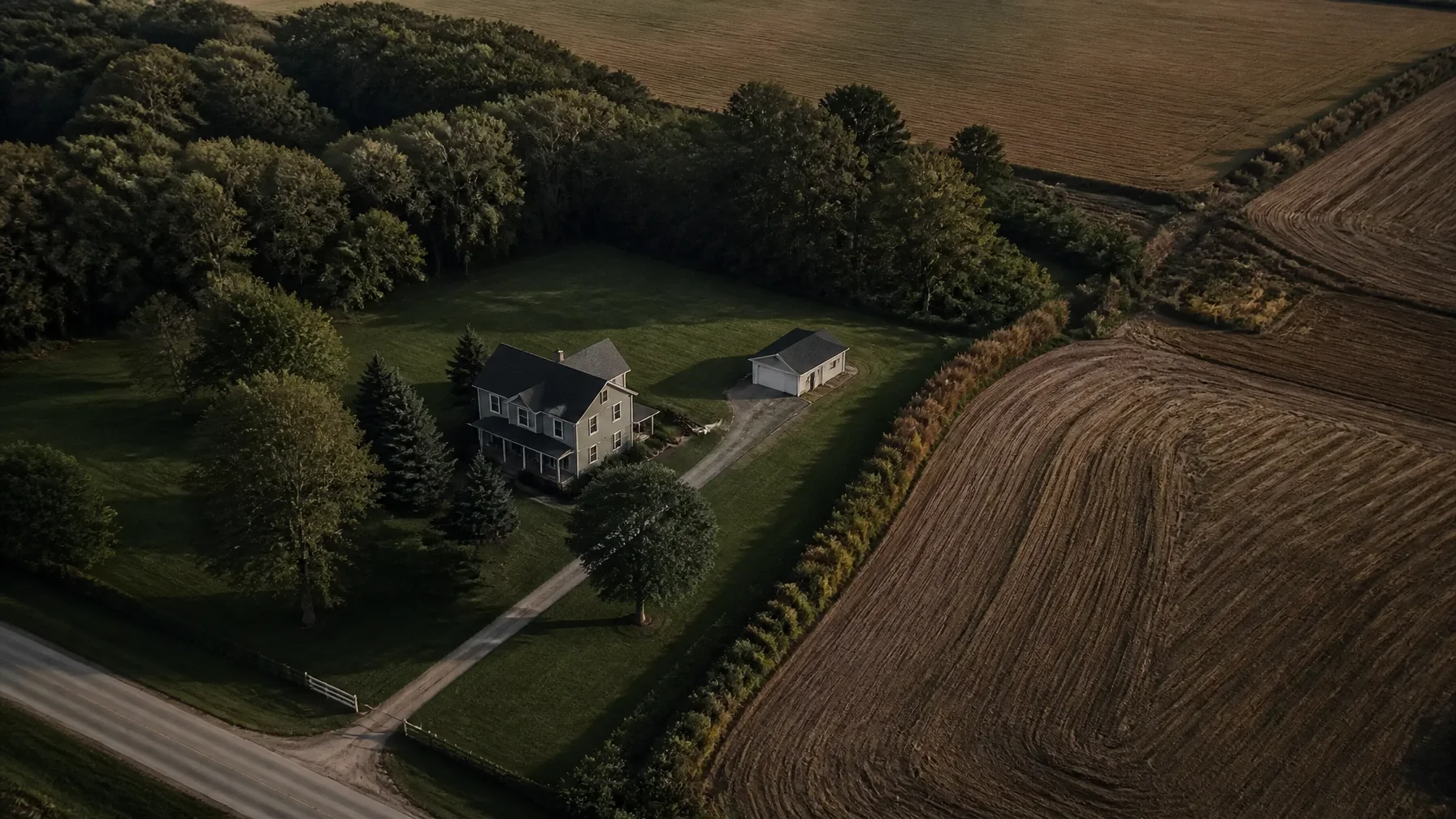
Aerial photographs can help show the physical separation between residential and agricultural uses.
The court needs a practical explanation of where the matrimonial home ends and the non-residential acreage begins.
4. Obtain a segmented appraisal
Request an appraisal that addresses the property in parts.
The appraisal should consider:
The value of the house.
The value of the garage and relevant outbuildings.
The value of the residential building site.
The value of the remaining farmland.
The date-of-marriage value.
The separation-date value.
Any changes in use.
Improvements made during the marriage.
The appraiser should understand the legal issue being addressed.
A report that gives only one value for the full parcel may leave the key question unanswered.

5. Prove the date-of-marriage value
The deduction depends on reliable valuation evidence.
Possible sources include:
A historical appraisal.
Comparable rural sales.
Assessment records.
Farm transaction data.
Transfer documents.
Expert appraisal evidence, where appropriate.
Historical photographs and building records.
The evidence should distinguish the residential portion from the agricultural portion as of the date of marriage.
A current appraisal cannot automatically establish historical value.
6. Address gifts and excluded property separately
If a parent transferred farmland to one spouse, obtain evidence about:
The donor.
The date of the transfer.
The intended recipient.
The transfer consideration.
Any written gift documentation.
Whether the gift was made to one spouse alone.
Whether the property remained identifiable.
Any use of the property during the marriage.
Lawson shows that the gift issue must be addressed directly.
A gift claim and a date-of-marriage deduction are not identical. The legal treatment depends on the evidence and the applicable provisions of the Family Law Act.
What should Dufferin County property owners prepare?
Rural property disputes can involve more than ordinary home valuations.
Properties in Mono, Mulmur, Melancthon, East Garafraxa and Amaranth may include:
Agricultural acreage.
Family-owned farms.
Rural businesses.
Severed lots.
Woodlots.
Outbuildings.
Farm equipment.
Corporate interests.
Intergenerational transfers.
Rural equalization claims involving agricultural assets.
Our family law practice is based at 162 Broadway, Suite 8, Orangeville. The office serves Dufferin County, the Shelburne area, Caledon and North Brampton.
The Orangeville office is a stress-free alternative for North Peel residents. Highway 10 and Highway 410 provide practical access. Free parking is available. Secure virtual intake is also available.
The Orangeville courthouse is located at 10 Louisa Street. Davis Courthouse in Brampton may be relevant for Peel Region proceedings. Courthouse security lines and filing requirements should be factored into attendance planning.
Our team handles cases at the Brampton Davis Courthouse. Our team focuses on the intersection of Criminal Defence and Family Law when related issues arise.
For family property matters, review our Family Lawyer in Brampton service page. For related criminal allegations, review our Criminal Defence Lawyer in Orangeville service page.
Complimentary 20-Minute Strategy Session
OMNI LAW GROUP business hours are Monday to Friday, 9:00 AM to 5:00 PM.
Quick Facts
Is the date-of-marriage deduction available for every rural property?
No. The deduction is generally unavailable for the portion that qualifies as the matrimonial home at separation. Non-residential acreage may be treated differently under section 18(3).
Does a large acreage automatically become a matrimonial home?
No. The court examines actual use and what land was reasonably necessary for residential use and enjoyment.
Does Iredale create a two-acre rule?
No. Iredale used two acres on the evidence before the court. It does not establish a fixed acreage rule for Ontario farms.
Can a farm gift be excluded?
Potentially. The transfer, recipient, documentation, tracing and statutory requirements must be reviewed separately from the matrimonial-home analysis.
What 2026 information should be updated?
Property calculations should use current 2026 information, including relevant valuation evidence and the 2026 Federal Child Support Table Updates where child support is also in issue. Property equalization and child support remain separate calculations.
Local Legal FAQ
Can I deduct the value of farmland owned before marriage?
A deduction may be available for farmland owned on the date of marriage if that land is not part of the matrimonial home and the value is proven. Section 18(3) may limit the matrimonial home to the house and the land reasonably necessary for residential use. The remaining acreage may then be treated as ordinary property. The evidence should establish ownership, date-of-marriage value, actual agricultural use and separation-date ownership. A separate appraisal is often important. A spouse should not assume that every acre qualifies or that the court will accept a percentage estimate without supporting documents.
How does Lawson apply to a Dufferin County farm?
Lawson confirms the need for a careful, fact-specific analysis where a residence sits on rural acreage used for farming or another non-residential purpose. The Court of Appeal remitted the property issues because the reasons did not adequately address section 18(3), the residential portion, the farmland and the claimed gift exclusion. For a Dufferin County property, evidence should explain the farming operation, the residential curtilage, ownership history and valuation. Lawson does not establish a fixed acreage amount. It establishes the need for clear reasoning and complete evidence.
What documents should be gathered before an equalization claim?
Gather the deed, transfer records, mortgage statements, tax records, appraisals, surveys, site plans, aerial photographs and date-of-marriage financial information. For working farms, also gather crop records, lease agreements, farm income documents, equipment records and agricultural classifications. For family transfers, obtain gift letters, estate documents and correspondence showing the intended recipient. Records should be organized chronologically. A family lawyer can then assess whether the residential portion is a matrimonial home, whether the balance may support a date-of-marriage deduction and whether a separate gift or inheritance exclusion should be claimed.
ABOUT THE AUTHOR

Rahul Kaushal is Co-founder of OMNI LAW GROUP and a member of the Law Society of Ontario. Rahul provides practical legal guidance on family property division, matrimonial homes, equalization and related family law disputes across Orangeville, Dufferin County, Brampton and Peel Region.
Contact OMNI LAW GROUP at 905-497-7200 for an initial consultation.
Legal Disclaimer: This article provides general legal information for Ontario readers. It is not legal advice and does not create a solicitor-client relationship. Results depend on the facts, evidence and applicable law. Current legal advice requires a confidential consultation.
Conflict Check Notice: OMNI LAW GROUP must complete a conflict check before discussing confidential case details or confirming representation. Contact information may be used for conflict-checking purposes.