

You can legally leave the matrimonial home, but taking your children without a formal agreement or court order is a high-risk "unilateral move." In 2026, Ontario courts increasingly penalize parents who bypass relocation notice rules, often ordering the immediate return of the children.
In This Guide
Your Rights to the Matrimonial Home (Section 19 FLA)
The Difference Between "Change in Residence" & "Relocation"
Risks of "Self-Help" and Abduction Allegations
Exceptions for Domestic Violence & Safety
Navigating the Davis Courthouse Process in Brampton
WE PROTECT YOUR POSSESSION RIGHTS
WE NAVIGATE COMPLEX PROPERTY DISPUTES.
WE ENSURE EQUAL ACCESS TO YOUR HOME.
WE STOP UNLAWFUL EVICTIONS BY SPOUSES.
Consultations Available & Results Driven
Under the Ontario Family Law Act, both married spouses have an equal right to possession of the matrimonial home. This right exists regardless of whose name is on the land title or the mortgage. Even if you are the one who decides to leave, you do not lose your equity or ownership interest in the house. However, the decision to take the children with you changes the legal landscape from property law to parenting law.
In Brampton, many parents mistakenly believe that "possession is nine-tenths of the law." They think that by moving the children to a new home first, they establish a new "status quo." At OMNI LAW GROUP, we see the opposite happen frequently at the Davis Courthouse. Judges often view "self-help" measures, moving without notice, as a sign of poor parental judgement.
WE SECURE YOUR PARENTING TIME
WE DRAFT ENFORCEABLE PARENTING PLANS.
WE OBTAIN URGENT COURT ORDERS.
WE PREVENT UNILATERAL CHILD RELOCATION.
Strategic Advice & Prompt Action
How do I leave the matrimonial home with my children in Brampton?
The most secure way to leave with your children is through a written Separation Agreement or a court order from the Ontario Superior Court of Justice. If you move within Brampton, perhaps near our office at North Park Drive, and it does not significantly impact the other parent's time, it may be classified as a "change in residence."
However, if your move makes the current parenting schedule impossible, it is legally a "relocation." Under the 2026 Federal Child Support Table updates, the Divorce Act, and Ontario’s notice framework, you must provide 60 days' written notice before a relocation. That notice should not be informal. Under O. Reg. 155/21, a proposed relocation must be set out in the formal Notice of Relocation court forms. The notice must include the proposed new address, contact information, the date of the move, and a proposal for how the other parent will maintain their relationship with the children.
The other parent then has a strict 30-day clock to object after receiving the notice. That objection should also be made properly and fast. Waiting too long can create serious procedural problems at the Davis Courthouse.
The burden of proof also shifts based on parenting time. If the parents have substantially equal parenting time, the parent who wants to move usually has to prove the relocation is in the child’s best interests. If the child spends the vast majority of time with the moving parent, the burden can shift, and the objecting parent may have to show why the move should not happen. That distinction matters in Brampton relocation cases because small schedule differences can change the whole argument.
Our team handles cases at the Brampton Davis Courthouse and focuses on the intersection of Criminal Defence and Family Law. This is crucial because moving without notice can sometimes lead to accusations of "parental abduction" under the Criminal Code.

WE DEFEND AGAINST ABDUCTION ALLEGATIONS
WE MANAGE DOMESTIC ASSAULT COMPLICATIONS.
WE REPRESENT CLIENTS IN CRIMINAL MATTERS.
WE NAVIGATE PEEL REGIONAL POLICE INVOLVEMENT.
Experienced Defence & Comprehensive Solutions
What are the legal risks of moving without a court order?
If you leave the matrimonial home with the kids unilaterally, you face three primary risks:
An Order for Immediate Return: The left-behind parent can file an urgent motion at the Davis Courthouse. If the judge finds the move was unauthorized, they can order the Peel Regional Police to assist in returning the children to the original home.
Damage to Your Credibility: Judges value "maximum contact" with both parents. If you are seen as someone who undermines the other parent’s relationship by "hiding" the kids, it will haunt your case for years.
Peel CAS Involvement: If the move is high-conflict or involves flight risks, Peel Children’s Aid Society (CAS) may become involved to investigate the children’s well-being.
If your situation involves safety concerns or domestic charges, the rules change. We frequently help clients who must leave due to violence. In these cases, we can apply for an "ex parte" (without notice) order to waive the 60-day rule and secure the children's safety immediately. If you are dealing with criminal charges related to a domestic incident, your ability to move is strictly tied to your bail conditions and family court orders.
What is the habitual residence trap if I switch school districts?
One of the biggest mistakes we see in Brampton is a parent moving first and changing the child’s school second. That can create a "habitual residence" fight very quickly. A new school district, new doctor, new daycare, and new daily routine can all be used as evidence that a parent tried to manufacture a new normal before the court ruled on relocation.
This is a trap. A rushed school switch can harden the other parent’s objection, trigger an urgent court motion, and make the judge focus on process instead of your reasons for moving. In Brampton and Orangeville, courts often look closely at whether the move was temporary, coordinated, and transparent, or whether it was a unilateral attempt to shift the child’s centre of life.
2026 cautionary case: Wilamowski v Kostyrko, 2026 ONSC 2126
A useful 2026 warning comes from Wilamowski v Kostyrko, 2026 ONSC 2126. The case is a reminder that unilateral moves with children can backfire badly when a parent changes the child’s living arrangements before getting consent or a court order. The court’s approach reflects a simple point: parents are expected to follow the relocation process, not create facts on the ground and ask for forgiveness later.
That matters at the Davis Courthouse. Judges are alert to moves that disrupt parenting time, school stability, and the child’s relationship with the non-moving parent. If a parent jumps ahead, the court can respond with return orders, cost consequences, and credibility findings that affect the entire parenting case.
Quick Facts for Brampton Parents
Courthouse: A. Grenville and William Davis Courthouse (7755 Hurontario St). Expect long security lines; arrive at least 30 minutes early for any appearance.
Office Proximity: Our OMNI LAW GROUP office is located on North Park Drive, providing a convenient "home base" for clients navigating the Brampton court system.
Support Impacts: Moving can change the "Section 7" expenses and child support amounts. Travel for access, extracurricular transportation, after-school care, and long-distance exchange costs often shift after a move. Ensure you review the 2026 child support updates before finalizing a new budget.
Business Hours: Monday to Friday, 9:00 AM to 5:00 PM.
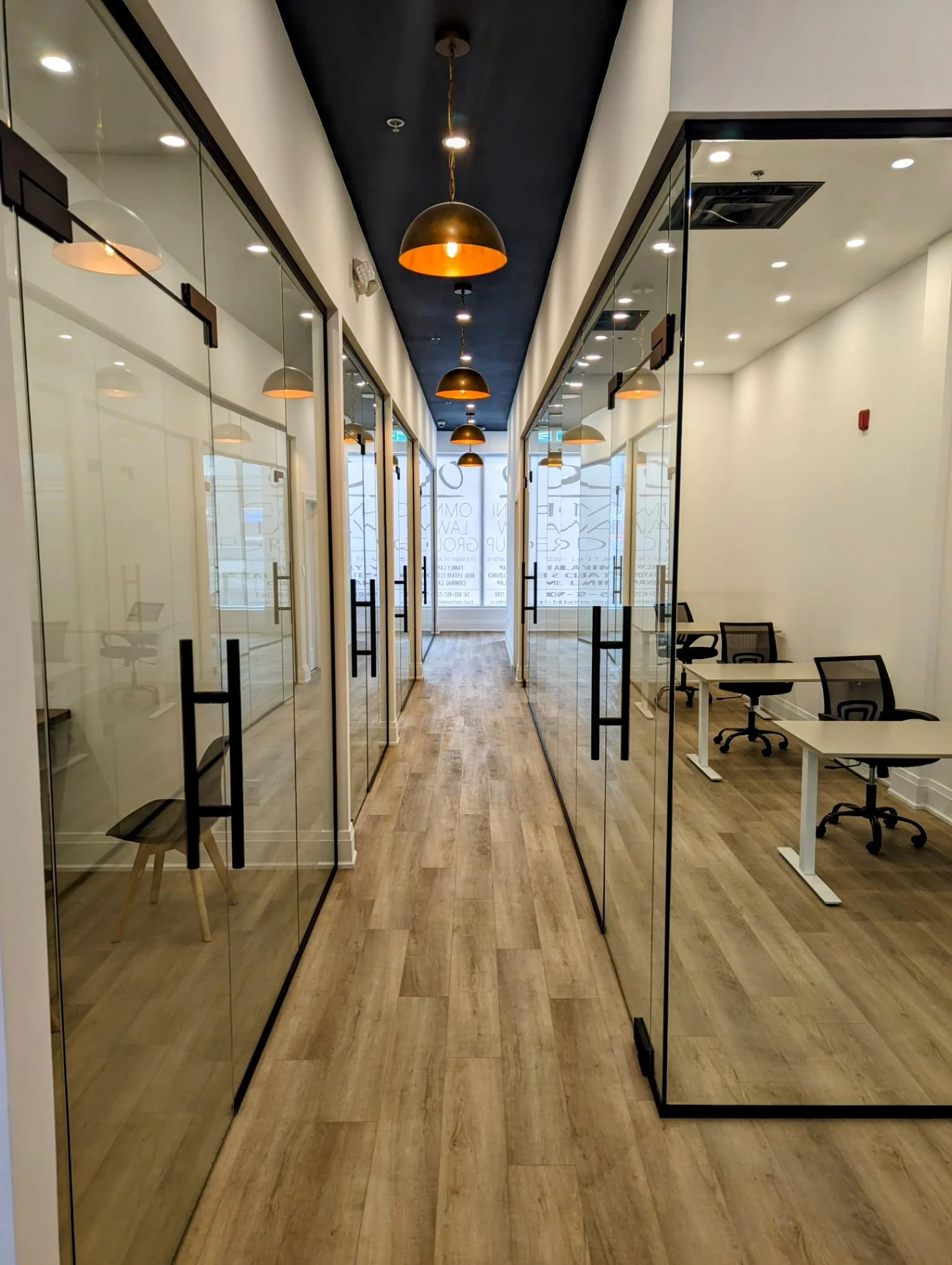
WE NAVIGATE THE INTERSECTION OF FAMILY & CRIMINAL LAW
Separation isn't always a clean break. Often, a move from the matrimonial home is triggered by a "911 call" or an intervention by Peel Regional Police. When criminal charges like domestic assault are laid, the accused parent is often barred from the matrimonial home by bail conditions.
At OMNI LAW GROUP, we are a one-stop legal solution. We understand how a criminal "no-contact" order interacts with your right to see your children. If you are a Family Lawyer in Brampton seeking a unified strategy, or a parent caught in this crossfire, we coordinate your family law response with your criminal defence. This prevents you from making statements in family court that could jeopardize your criminal trial.

Why "Status Quo" Matters in 2026
Ontario judges rely heavily on the "status quo", the established routine of the child. If you move out without the children, you may accidentally establish a status quo where the other parent is the primary caregiver. This makes it much harder to fight for primary parenting time later. Conversely, if you move with the children unilaterally, the court may view the "new" status quo as illegitimate because it was obtained through "self-help."
Status quo also connects directly to burden of proof. In a substantially equal parenting arrangement, the moving parent usually carries more of the legal burden. In a case where one parent already has the vast majority of parenting time, the analysis can shift. That is why even short-term schedule changes in Brampton can have long-term consequences if they are not documented properly.
Before you pack a single bag, speak with an experienced Criminal Defence Lawyer in Orangeville or Brampton who understands the stakes. We focus on practical solutions that keep you out of legal hot water while prioritizing your children’s stability.
Local Legal FAQ
Can the police force me back into the matrimonial home?
No, the Peel Regional Police generally do not get involved in property possession disputes unless there is a court order or a breach of the peace. However, they can enforce "Return of Child" orders issued by the Davis Courthouse. If you have been "locked out" of your home by a spouse, you typically need a family court order for "exclusive possession" to get back in, rather than calling 911, unless there is a direct threat of violence.
Does leaving the house mean I lose my share of the property?
No. In Ontario, your interest in the matrimonial home is protected by the Family Law Act. Leaving the house to escape a toxic environment or to start a new life does not constitute "abandonment" of your financial equity. You are still entitled to your share of the value through the equalization process. However, leaving without a plan for the children can negatively impact your parenting rights, which is why legal advice is vital before you exit.
What if my spouse won't let me take the children's belongings?
This is a common flashpoint. If you are moving out, try to take essential items (clothing, school supplies, medication) during the initial move. If you are barred from the home, we can assist in negotiating a "property pickup" or obtaining a court order that specifies when and how you can retrieve your and the children’s personal effects. Avoid "self-help" entries into the home if there are existing tensions, as this can lead to mischief or break-and-enter charges.
Who pays the extra travel and activity costs after a relocation?
Usually, the answer depends on the parenting plan, each parent’s income, and whether the move was reasonable. In many Brampton cases, a relocation changes Section 7 sharing for daycare, after-school care, and activities because transportation and exchange costs increase. Travel for parenting time can become a major issue on its own. Courts may reallocate these costs if one parent’s move creates the added expense, especially where the move makes the old schedule unrealistic. This is one reason relocation should be planned with formal notice, a revised parenting schedule, and a new budget from the start.
ABOUT THE AUTHOR

Rahul Kaushal is the Co-founder of OMNI LAW GROUP. As a dedicated member of the Law Society of Ontario, Rahul has built a career focused on providing comprehensive legal solutions for individuals facing the most challenging moments of their lives. Based in Brampton, he navigates the complexities of the Davis Courthouse daily, specializing in the critical intersection of Family Law and Criminal Defence. Rahul and Co-founder Vaneet Sangha lead a team committed to personalized attention and practical results for families across Peel Region and beyond.