
Family Court Orders Vs. Criminal Bail Conditions: Which One Wins for Your Parenting Schedule?
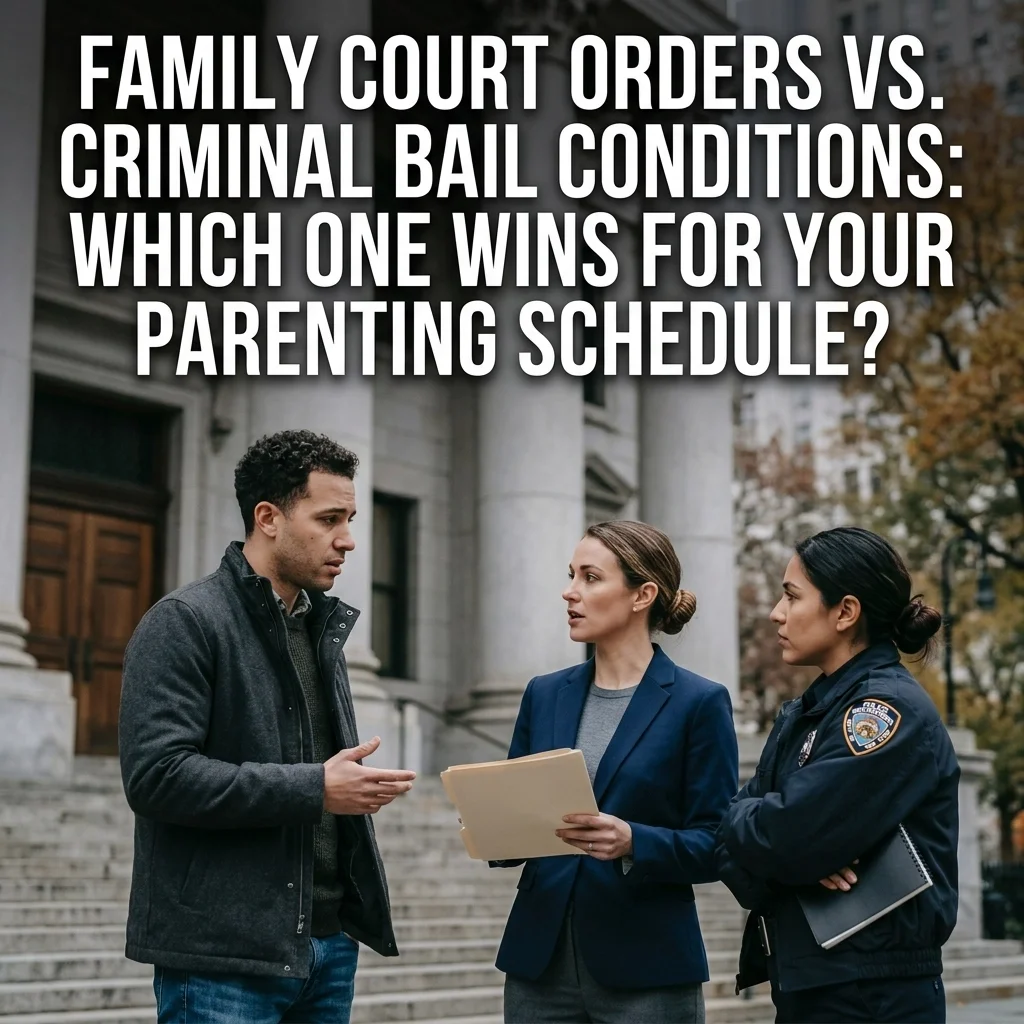
If you are standing in the hallway of the A. Grenville and William Davis Courthouse in Brampton, you might feel like you are caught between two completely different worlds. On one side, you have a family law matter regarding your children and your parenting schedule. On the other, you are dealing with a criminal charge and strict bail conditions.
The big question we hear all the time at OMNI LAW GROUP is: "I have a family court order that says I can see my kids this weekend, but my bail says 'no contact' with my ex. Which one do I follow?"
It is a stressful spot to be in. If you follow the family order, you might get arrested for a bail breach. If you follow the bail order, you might look like a parent who is "abandoning" their kids in the eyes of the family court. Navigating this overlap requires a unified strategy.
OMNI LAW GROUP
WE PROVIDE UNIFIED DEFENCE & FAMILY LAW SOLUTIONS
905-497-7200 | Trusted Brampton & Orangeville Counsel
The hierarchy of court orders: why criminal law usually takes the lead
When people ask which order "wins," the blunt answer is that criminal bail conditions almost always supersede family court orders. In the Canadian legal system, criminal matters involve the Crown and the liberty of the individual. If a Justice of the Peace or a Judge in a criminal court says you cannot have contact with your spouse or be within 100 metres of their home, that is a direct order.
Breaching a bail condition is a separate criminal offence. It doesn’t matter if your family law agreement says you have "joint custody" or a specific weekend rotation. If your bail says "No Contact," and you show up at the front door to pick up the kids, you are likely going to jail.
At OMNI LAW GROUP, we see this conflict frequently in Brampton and Orangeville. Parents often think that because a Family Court Judge signed an order after the bail was set, the new order automatically overrides the old bail. That is a dangerous mistake. Unless your bail specifically allows for an exception, the criminal restrictions remain the "law of the land" for you personally.

The "No Contact" trap and your parenting time
Most domestic-related charges in Ontario come with standard "no contact" and "no go" conditions. These are designed to protect the complainant, but they often have the side effect of completely severing the relationship between a parent and their children.
If your children live with the person you are prohibited from contacting, your parenting schedule effectively hits a brick wall. This is where a unified defence guide becomes essential. You cannot simply ignore the bail, but you also shouldn't let months go by without seeing your children, as that can create a "new status quo" in family court that is hard to undo later.
We often assist clients in Orangeville and Brampton by seeking "variations" to bail conditions. This process involves negotiating with the Crown or bringing a transition motion to allow for contact specifically for the purpose of exercising parenting time, usually through a neutral third party or a supervised access centre.
How to use the "Family Court Exception" clause
There is a specific way to bridge the gap between these two courts. When a criminal lawyer (or a firm that handles both, like OMNI LAW GROUP) negotiates bail, we look for a very specific phrase: "Except as may be ordered by a Family Court of competent jurisdiction."
This is the "golden ticket" phrase. If this clause is in your bail conditions, it means the criminal court is essentially saying, "We aren't going to set the parenting schedule here, but if the Family Court decides it’s okay for you to see the kids, we won't arrest you for it."
Without this clause, even a brand-new family court order won't protect you from a criminal charge of failing to comply with a release order. If you are currently facing charges, it is vital to ensure your brampton domestic assault and child support strategy accounts for these overlaps from day one.
OMNI LAW GROUP
WE COORDINATE YOUR DEFENCE & FAMILY LITIGATION
905-497-7200 | Brampton | Orangeville
Why a unified strategy is better than two separate lawyers
In Brampton and Orangeville, it is common for people to hire one lawyer for their criminal case and a completely different firm for their divorce or custody battle. While this is a standard approach, it can lead to disaster if the two lawyers aren't talking to each other.
For example, your criminal lawyer might suggest a "peace bond" to resolve your charges. While that sounds great for your criminal record, the "admissions" or conditions in that peace bond could be used against you in family court to argue that you are a safety risk to the children. This is why we focus on a unified defence approach. Every move made in the criminal box at the Davis Courthouse has a ripple effect on your family file.
Whether you are dealing with coercive control allegations or simple disputes over the 2025 federal child support tables, the strategy must be cohesive.

Practical steps when your orders clash
If you find yourself with conflicting orders today, here is the organic, practical advice we give our clients:
Read your Bail Order first. Look for the "No Contact" section. Is there an exception for "contact through a third party" or "as ordered by a family court"?
Do not engage in "self-help." Even if your ex-partner texts you and says, "I don't care about the bail, come over and see the kids," do not go. They cannot waive a court order. Only a Judge or Justice of the Peace can change it.
Contact your lawyer immediately. You may need to bring a motion in family court to establish a safe, third-party exchange protocol. This order can then be used to satisfy the criminal court's requirements.
Use third parties. In both Brampton and Orangeville, there are services and neutral relatives who can facilitate exchanges so you never have to come into direct contact with the other parent.
If you are worried about how your criminal charges will impact your child support updates or your general parenting rights, you need to act quickly.
Protecting your future in Brampton and Orangeville
The legal system is complicated, and it feels twice as heavy when you’re fighting on two fronts. The goal is always to protect your relationship with your children while ensuring you remain in compliance with the law.
Criminal bail conditions are about "risk management" for the public and the complainant. Family court orders are about the "best interests of the child." These two things don't always align naturally, but with the right legal strategy, they can coexist.
At OMNI LAW GROUP, we are dedicated to helping people in our community find that balance. We understand the local court systems in Peel and Dufferin County. We know the stress of wondering if a simple school pickup will result in a phone call to the police.
OMNI LAW GROUP
WE SECURE YOUR FAMILY & YOUR FREEDOM
905-497-7200 | Request A Consultation Today
Summary of the "Who Wins?" debate
To recap, if you have a criminal "No Contact" order and a family court "Access" order:
Criminal Bail wins in terms of immediate consequences (arrest/jail).
Family Court wins in terms of determining long-term parenting rights.
The Solution is to vary the bail to include the "Family Court Exception" so that the two orders can work together rather than against each other.
Don't guess when it comes to your freedom or your kids. If you're stuck in this conflict, reach out to an experienced team that understands both sides of the Davis Courthouse hallways.

Whether you're in the middle of a simple divorce or a complex domestic litigation, we are here to help you navigate the path forward.
OMNI LAW GROUP
905-497-7200
Brampton & Orangeville Legal Services