
Domestic Assault Lawyer Orangeville: Bail Conditions, Family Court & Your Next Steps (2026 Guide)
A domestic assault charge can create two legal tracks at once: criminal bail restrictions & family court decisions about parenting, housing, and support.
In This Guide
Bail conditions & no-contact orders
Formal bail variation procedures
Parenting, family violence & the best-interests test
Exclusive possession, child support & Peel CAS
Orangeville Courthouse logistics
Coordinating criminal defence & family law
OMNI LAW GROUP SERVES ORANGEVILLE & DUFFERIN COUNTY
OMNI LAW GROUP provides focused legal services for domestic assault charges, bail conditions, parenting disputes, separation, and family court applications.
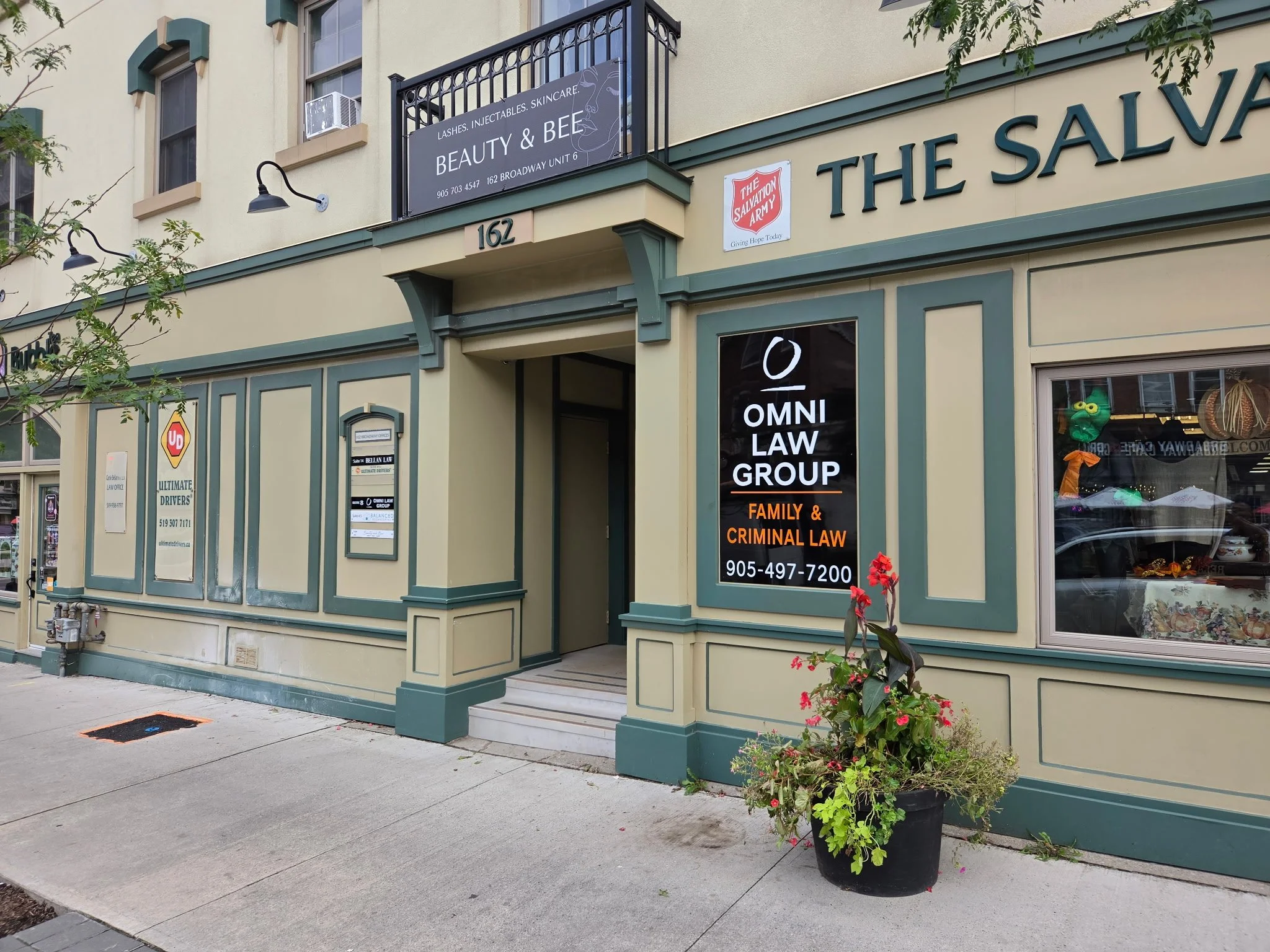
The Orangeville office is located at:
162 Broadway, Suite 8, Orangeville, ON L9W 1K3
Phone: 905-497-7200
Business Hours: Monday to Friday, 9:00 AM to 5:00 PM
An initial consultation can address the criminal case, family court issues, or both.
WE DEFEND DOMESTIC ASSAULT CHARGES
Domestic assault allegations can involve assault, uttering threats, mischief, harassment, or related charges.
The criminal case may involve:
Arrest or police detention
A release order or undertaking
No-contact conditions
No-go conditions
Bail review applications
Disclosure review
Trial preparation
Sentencing issues
Dufferin OPP may enforce the existing release terms. Dufferin OPP cannot cancel, relax, or rewrite a bail condition.
A complainant’s permission does not override a no-contact order. Contact can remain prohibited even when both parties want communication.
What is the first rule after a domestic assault arrest?
The first rule is simple: follow every release condition exactly as written.
No contact may include:
In-person communication
Phone calls
Text messages
Email
Social media
Contact through friends or relatives
Attendance at a shared home, workplace, or school
A breach can result in a new criminal charge. A breach can also affect future release decisions and family court proceedings.
A no-contact condition remains binding until the criminal court formally changes the condition or the order ends. Informal permission is not enough.
WE PREPARE BAIL VARIATION REQUESTS
A bail condition can sometimes be changed. The process must be formal.
A consent variation may be available under section 519.1 of the Criminal Code. A lawyer can prepare the request and identify a narrow change.
Common requests include:
Communication about children only
Communication through a parenting application
Communication through counsel
A third-party exchange arrangement
Supervised parenting time
Attendance at a family court proceeding
Access to personal property
The request should explain the purpose, structure, and safety measures.
The Crown may consider:
The seriousness of the allegation
Previous criminal history
Any alleged pattern of family violence
Compliance with existing conditions
Counselling or treatment
Stable housing
A proposed parenting plan
The views and safety concerns of the complainant
The Crown’s consent does not itself change the order. A judge or justice of the peace must approve the variation.
The Ontario Court of Justice consent variation procedure provides official procedural information.
What happens when the Crown does not consent?
A contested bail review or variation application may be necessary.
The proper court and procedure depend on the original release order and the circumstances of the case. A Superior Court application may involve Criminal Code sections 520 or 521.
Materials may include:
The original release order
The transcript from the original hearing
Affidavit evidence
A proposed parenting schedule
Proof of counselling or treatment
Housing and employment information
Details of supervised exchanges
Information about third-party communication
A court may grant, refuse, or narrow the requested change.
A broad request for unrestricted communication may create concern. A precise child-focused proposal may receive different consideration. No result is guaranteed.
WE COORDINATE CRIMINAL & FAMILY LAW
Domestic assault cases often move through criminal court & family court at the same time, but each court is dealing with a different issue.
The criminal court focuses on:
Public safety
Release conditions
Alleged offences
Evidence
Criminal procedure
Trial or resolution
The family court focuses on:
Parenting time
Decision-making responsibility
Child safety
Family violence
Exclusive possession of the home
Child support
Spousal support
Family-law protection orders
A family court order does not automatically cancel a criminal no-contact condition.
Sometimes a release order permits contact pursuant to a later family court order. The exact wording matters. A family lawyer and criminal defence lawyer must review both orders together.
How does family court assess parenting after alleged family violence?
The best-interests test applies.
Under the federal Divorce Act, family violence is a required consideration in parenting decisions. Ontario’s Children’s Law Reform Act also directs the court to assess the child’s best interests.
Relevant factors can include:
The nature of the alleged violence
The seriousness and frequency of the conduct
Whether a child witnessed or experienced the conduct
The effect on the child’s safety and well-being
The ability of each parent to support a safe relationship
The willingness to follow court orders
The risk of continued conflict
The practicality of proposed parenting arrangements
A domestic assault charge does not automatically determine parenting time. A criminal charge is also not a finding of guilt.
Family court may consider structured arrangements such as:
Supervised parenting time
Neutral exchange locations
Third-party exchanges
Parenting applications
Written communication limited to child-related issues
No direct parent-to-parent communication
A gradual parenting schedule
The family court process remains separate from the criminal prosecution.
WE ADDRESS HOME, PARENTING & SUPPORT ISSUES
A domestic assault allegation can also create immediate housing problems.
Family court may consider exclusive possession of a matrimonial home. Exclusive possession can restrict one spouse from entering or occupying the home, depending on the facts and the applicable legislation.
A family court may also address:
Who remains in the home
Access to personal belongings
Mortgage and household expenses
Parenting exchanges
Temporary support
Child support
Communication arrangements
Child support is separate from the criminal charge.
For 2026 Ontario matters, the updated Federal Child Support Tables that took effect on October 1, 2025 remain the applicable tables.
The calculation may depend on:
Annual income
Number of children
Parenting time
Special or extraordinary expenses
Existing orders
Income disclosure
The applicable legislation
The Justice Canada child support table guidance provides current calculation information.
Can Peel Children’s Aid Society become involved?
Yes. The Peel Children’s Aid Society (CAS) may become involved when information raises child safety concerns. The agency’s role is separate from both criminal court & family court.
CAS involvement may include:
A safety assessment
Interviews with parents
Contact with children
Requests for records
Safety planning
Communication with police or counsel
Court involvement where required
A CAS investigation does not decide criminal guilt. It can still affect family court evidence and parenting arrangements.
A person contacted by CAS should understand the request, preserve relevant documents, and obtain legal advice before making significant decisions.
LOCAL COURT LOGISTICS IN ORANGEVILLE & BRAMPTON
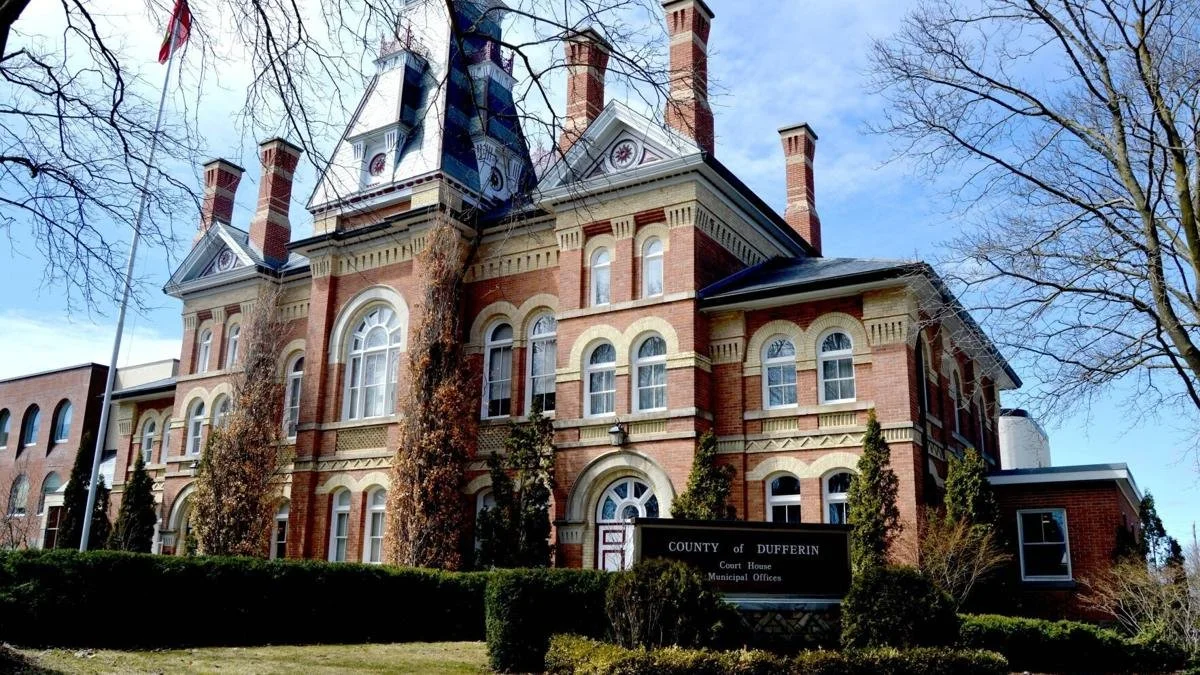
If court attendance is required, practical planning matters. The Orangeville Courthouse is located at 10 Louisa Street, Orangeville. Criminal and family matters may require attendance at the courthouse.
Courthouse security lines can delay entry. Arriving early allows time for:
Bag inspection
Metal detector screening
Courtroom location
Counsel meetings
Document review
Accessibility arrangements
Prohibited items should remain outside the courthouse. Phones must remain silent in courtrooms. Recording is restricted.
For Peel matters, the A. Grenville and William Davis Courthouse is located at 7755 Hurontario Street, Brampton. OMNI LAW GROUP serves Brampton clients from 162 Broadway, Suite 8, Orangeville, ON L9W 1K3, with virtual and in-person consultation options for Brampton and Peel Region matters.
QUICK FACTS
How long do no-contact bail conditions last?
No-contact conditions commonly remain in place until the criminal case ends or a court formally varies the release order. The duration depends on the proceeding, adjournments, trial schedule, and any resolution. A complainant cannot remove the condition independently. A lawyer can review the release document and identify the available variation process.
Can a family court order override criminal bail?
A family court order should not be treated as permission to breach a criminal release order. Conflicting terms require immediate legal review. The criminal condition remains binding unless the criminal court changes it. A coordinated application may be necessary so that parenting arrangements fit within lawful criminal release terms.
What should a person bring to an initial consultation?
Bring the release order, undertaking, information, appearance notice, police paperwork, family court documents, prior orders, support records, and communication relevant to parenting or alleged breaches. A clear timeline also helps. OMNI LAW GROUP can review criminal and family documents together where both legal tracks are active.
NEXT STEPS FOR AN ORANGEVILLE DOMESTIC ASSAULT CASE
A practical response starts with document review.
The accused person should:
Read every bail condition.
Stop prohibited communication.
Avoid indirect contact through others.
Preserve messages and records.
Attend every scheduled court date.
Identify any family court deadlines.
Ask counsel about a targeted bail variation.
Prepare a safe parenting proposal.
Address support and housing issues separately.
Avoid discussing the case publicly or online.
Our team at OMNI LAW GROUP can coordinate the criminal defence and family law issues under one roof.
We handle cases at the Brampton Davis Courthouse, and we focus on the intersection of Criminal Defence & Family Law, where Orangeville & Brampton matters often require careful coordination when bail conditions affect parenting.
For Brampton family matters, visit the Family Lawyer in Brampton.
For Orangeville criminal matters, visit the Criminal Defence Lawyer in Orangeville.
Initial Consultation: 905-497-7200
Office: 162 Broadway, Suite 8, Orangeville, ON L9W 1K3
Hours: Monday to Friday, 9:00 AM to 5:00 PM
Local Legal FAQ
What happens to parenting time after a domestic assault charge in Orangeville?
A domestic assault charge does not automatically decide parenting time. Family court applies the best-interests test and considers family violence, child safety, the nature of the allegations, and the practical parenting plan. Existing criminal bail conditions remain important. Parenting exchanges may require supervision, a third party, or a neutral location. Direct communication may remain prohibited. A family court order should not be followed in a way that breaches criminal bail. Coordinated legal advice can identify whether a bail variation, family court application, or both are required.
Can a complainant in Orangeville give permission to break a no-contact order?
No. A complainant’s permission does not change a release order. Contact may remain prohibited through messages, calls, social media, third parties, or in-person meetings. A breach can lead to a new criminal charge and stricter conditions. Only the authorized court can vary the order. A lawyer can review whether a consent variation under section 519.1 is available. If consent is refused, a formal bail review or other court process may be required. The original conditions remain binding until formal approval takes effect.
Does child support continue during a domestic assault prosecution?
Child support remains a separate family-law issue. A criminal prosecution does not automatically suspend or cancel support obligations. Ontario calculations in 2026 use the updated Federal Child Support Tables effective October 1, 2025, subject to the facts of the case. Income, number of children, parenting arrangements, and special expenses may affect the amount. A family court can address temporary or ongoing support. Financial disclosure should be maintained. Legal advice can help separate child support issues from criminal allegations, bail conditions, and parenting restrictions.
Legal Disclaimer & Conflict Check
This article provides general legal information for Ontario matters. It is not legal advice and does not create a solicitor-client relationship. Results depend on the facts, evidence, procedural history, and applicable law. Legal rules and court procedures can change.
A conflict check is required before OMNI LAW GROUP can discuss confidential facts or accept a matter. Contact information alone does not establish representation. Do not send urgent or time-sensitive instructions by email or online form before speaking with the firm.
ABOUT THE AUTHOR

Rahul Kaushal is Co-founder of OMNI LAW GROUP. Rahul Kaushal is a member of the Law Society of Ontario. Rahul Kaushal provides legal guidance across criminal defence and family law matters in Brampton, Orangeville, and surrounding communities.

Vaneet Sangha is Co-founder of OMNI LAW GROUP. Vaneet Sangha supports the firm’s comprehensive legal services for family and criminal law matters across Peel Region, Orangeville, and Dufferin County.